Intelligence and security run concurrently at Regent Intel. There is no waiting for one discipline to complete before the other begins. The analyst and the operator work from the same picture, under the same command, at the same time.
The protective intelligence methodology that governs Regent Intel engagements was developed from direct operational experience across high-threat domestic and international environments. It was not assembled from existing frameworks. It was built to address what those frameworks did not cover.
Every engagement, regardless of scope or service type, is governed by the same methodology, overseen by the same leadership, and documented to the same standard. A TSCM sweep, a travel security briefing, and a full protective intelligence program are not separate services. They are expressions of the same operational doctrine applied at different scales.
Each brought a different collection discipline, a different analytical framework, and a different legal and operational standard. The methodology was built by integrating all five into a single governed doctrine. Regent Intel was built at the intersection of all of them.
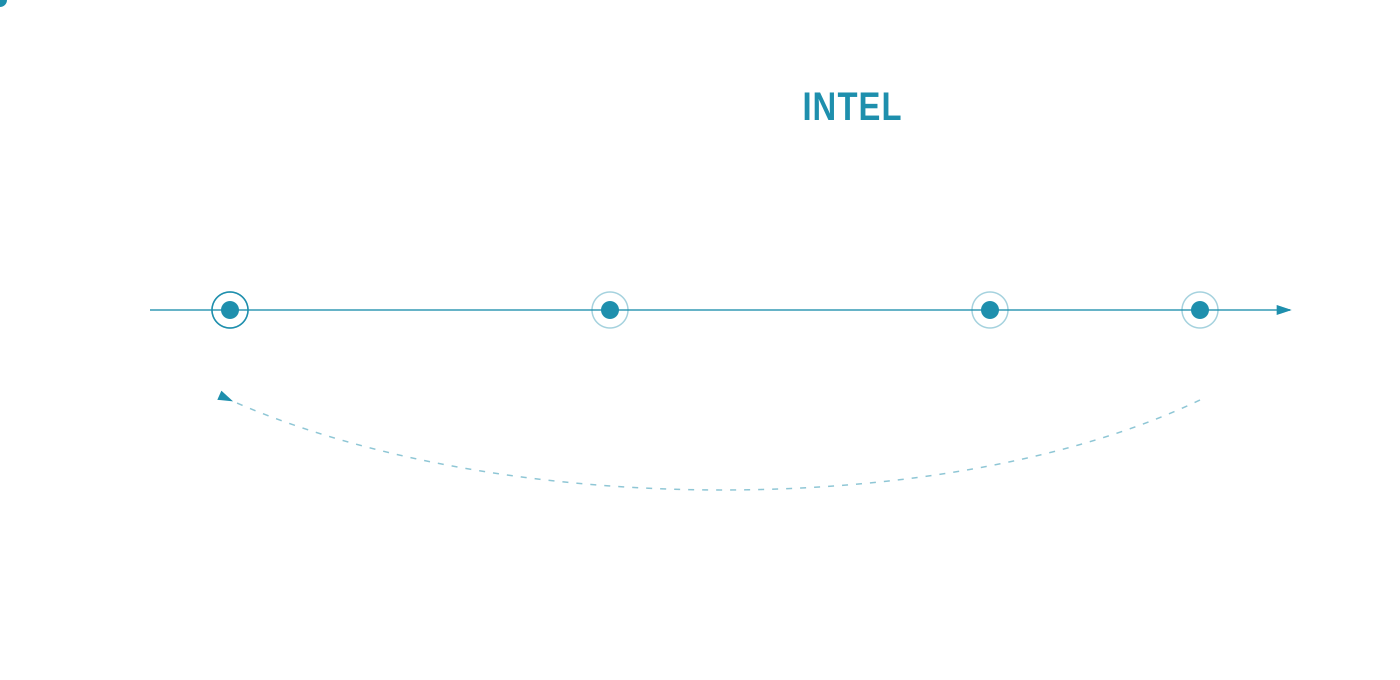
Every engagement begins with a disciplined assessment of the principal's environment. Digital footprint, travel patterns, facility exposure, insider risk, and threat vectors specific to their profile, position, and current circumstances. This is not a checklist. It is a collection-driven analytical process that informs every subsequent decision.
Collection runs continuously across open-source, technical, and human disciplines, correlated by analysts trained to identify what a change in pattern means before it becomes an incident. Intelligence is not a deliverable. It is a continuous function running alongside physical security operations, sharing the same picture, informing the same decisions, in real time.
Protection is designed to the principal's actual environment and threat picture. Posture, personnel, and protocols are calibrated to what the intelligence shows, not applied from a template. A principal with low visibility and a domestic threat environment requires a fundamentally different program than one with global movement and elevated exposure. Both receive the same analytical rigor.
Practitioners operate with the discipline to remain integrated, to anticipate rather than react, and to respond as conditions develop, working from the same intelligence picture the analyst maintains. Every action is documented. Every decision is defensible. The program is reviewed and adjusted as conditions evolve, not held static against a world that keeps moving.
The measure of an effective protective intelligence program is not the incidents it responds to. It is the incidents that never occurred because the threat was identified, assessed, and addressed before it reached the principal's environment.
That outcome requires intelligence discipline, not just protective presence. It requires analysts who understand targeting behavior, operators who read environments in real time, and a methodology that connects both into a single, governed response capability.
That is what Regent Intel provides.
All inquiries are handled with complete confidentiality.
 Regent Intel